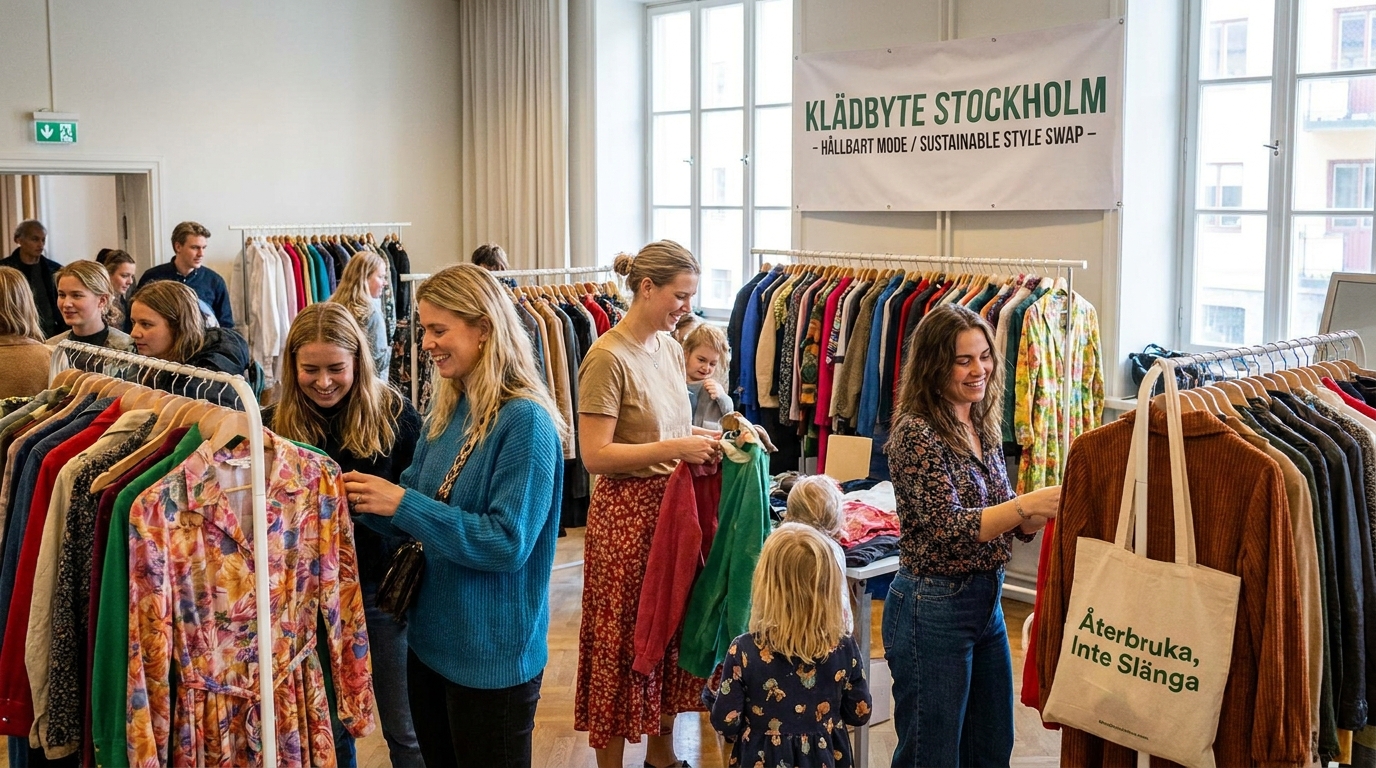
Sweden is proving that staying stylish doesn’t have to cost the Earth. Through the growing trend of community clothing swaps, fashion lovers are trading their pre-loved items for fresh finds, effectively turning the tide against textile waste in the most social way possible.
Background & Origin
Sweden has a long-standing reputation for being a global green pioneer, from its efficient recycling systems to its love for nature. However, like many developed nations, it also faced the growing problem of “fast fashion”—an industry where clothes are produced cheaply and discarded quickly. In response to the massive environmental footprint of textile production, which consumes vast amounts of water and energy, eco-conscious Swedes began looking for a more mindful alternative. What started as small, grassroots gatherings in living rooms has blossomed into a nationwide movement. The idea was simple: instead of letting perfectly good clothes gather dust or end up in a landfill, why not give them a second life with someone else? This shift reflects a deeper cultural move away from mindless consumption toward a more “circular” lifestyle.
Latest Developments
Today, these clothing swaps have evolved into high-energy, well-organized social events that feel more like a boutique experience than a hand-me-down market. The most prominent example is “The Big Clothing Swap Day” (Stora Klädbytardagen), an annual event coordinated by the Swedish Society for Nature Conservation. The process is incredibly user-friendly: participants typically bring five to ten high-quality items they no longer wear and receive “tickets” or coupons in exchange. These tickets act as currency, allowing them to “shop” for new-to-them pieces brought by other attendees. To make the experience even more inviting, many of these events now feature local DJs, pop-up cafes serving organic fika, and even professional tailors who offer tips on how to mend or upcycle garments on the spot.
Impact & Significance
The environmental impact of this trend is truly staggering. By choosing a swapped item over a brand-new one, participants help save thousands of liters of water and significantly reduce the carbon emissions associated with manufacturing and shipping new textiles. But the significance goes beyond just the numbers; it is about changing the narrative of secondhand fashion. In Sweden, “pre-loved” is no longer seen as a budget option, but as a trendy, curated, and unique choice. It encourages a sense of community and shared responsibility, proving that sustainability doesn’t have to feel like a sacrifice. It transforms the act of shopping from a solitary, commercial transaction into a collective celebration of style and environmental stewardship.
Future Outlook
As the success of these physical events continues to ripple across Scandinavia, the trend is beginning to influence the global fashion stage. We are already seeing the rise of digital swapping platforms and mobile apps that aim to replicate the Swedish model on a worldwide scale. The future of fashion looks less like a crowded shopping mall and more like a vibrant, shared global closet. By making eco-friendly habits both trendy and accessible, Sweden is providing a blueprint for how other countries can tackle waste. The message is clear: the most sustainable garment is the one that already exists, and the most stylish way to get it is by sharing with your neighbor.